Siksälä vanem muster on inspireeritud umbes 13. sajandil kantud sõbast. Selle omanikuks oli noor, 18–21 aastane neiu. Tänu geneetilistele uuringutele teame tema perekonnast üllatavalt palju.
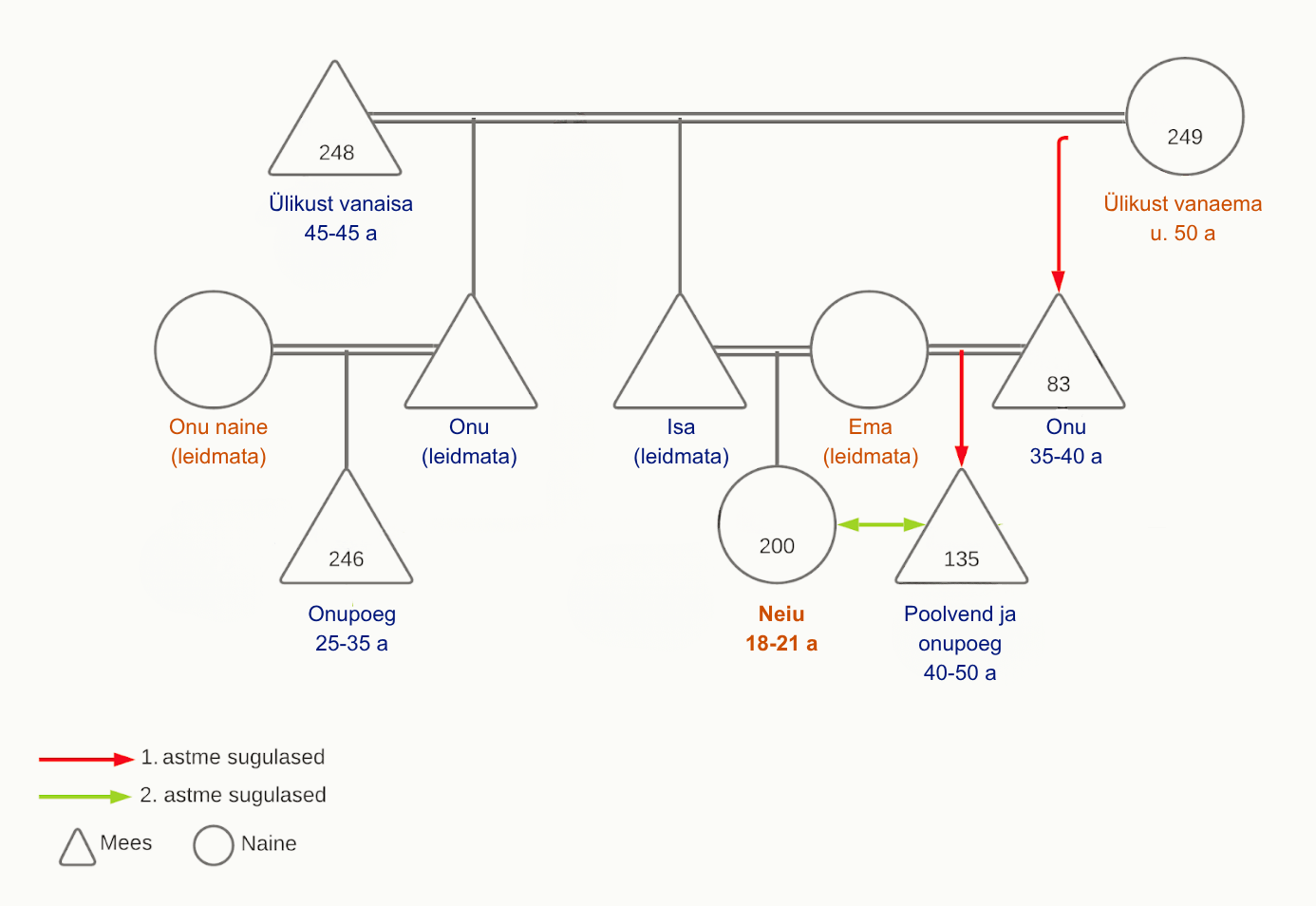
Rekonstrueeritud sugupuu näitas, et noor naine oli Siksälä ülikupaari lapselaps.
Lisaks tema isale oli ülikupaaril veel kaks poega. Ühega neist sündis neiu emal veel teinegi laps.
See tähendab, et olid nad poolõde ja -vend, kuid samal ajal ka üksteisele onulapsed.
Lisaks sellele suuremale sugupuule (vt pilti) õnnestus geneetikutel rekonstrueerida ka mitu väiksemat perekonnagruppi. Analüüsid näitasid, et sugulussidemed kulgesid valdavalt meesliini kaudu. Mehed jäid elama oma sünnikogukonda, naised aga liitusid abielludes. Selline korraldus on iseloomulik paljudele keskaegsetele ühiskondadele.
Rohkem Instagramis ja Facebookis.
———————————————————-
The older Siksälä pattern is inspired by a shawl worn around the 13th century. Its owner was a young woman, approximately 18–21 years old. Thanks to genetic research, we know a surprising amount about her family.
A reconstructed family tree revealed that the young woman was the granddaughter of Siksälä’s elite couple.
The couple had two other sons in addition to her father. The young woman’s mother also had a child with one of these brothers.
As a result, the two children were half-sister and half-brother, while at the same being cousins.
In addition to this larger family tree (see image), geneticists were able to reconstruct several smaller family groups. The analyses showed that kinship ties were traced primarily through the male line. Men remained in their birth community, while women joined the community through marriage. This pattern is characteristic of many medieval societies.