Sarnaselt eelmises postituses käsitletud Järva-Jaanile kasutati ka Siksälä kalmistut pikalt – ligi 500 aastat, kõige aktiivsemalt 13.–15. sajandil.
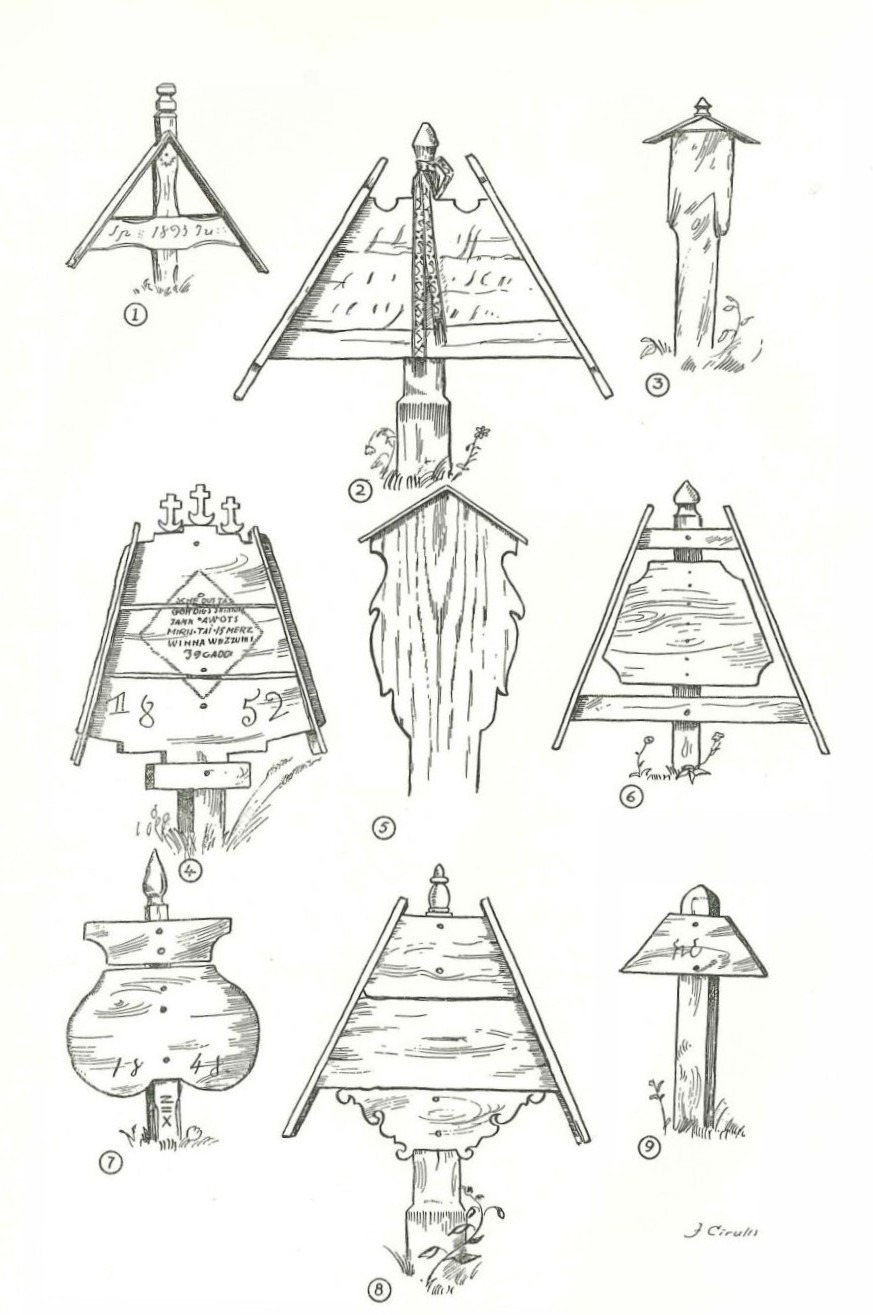
Siksäläs hauad omavahel ei kattu, seega ilmselt olid need maapinnal kuidagi tähistatud. Pole teada, millal hakati haudu ristidega tähistama, kuid pole välistatud, et need olid kasutusel juba keskajal. Ilmselt seisid keskaja lõpus kõrvuti nii ristid kui ka vanemad puidust hauamärgid. Pildil on taolised tähised 19. sajandi Lätist.
Ristidele ja puusammastele võidi kinnitada linik, rätik või vöö. Puitu lõigati ilmselt ka peremärke. Need polnud ainult kaunistused – märkide järgi tundsid õige haua ära inimesed, kes lugeda ei osanud!
Haudade sisemusest on samuti säilinud üksikuid, kuid kõnekaid jälgi toonastest kommetest. Mõne kirstu põhjast leiti taimede, õlgede ja linase riide jäänuseid. Tekstiili leiti kohati ka kirstujoonest väljaspool. See annab alust arvata, et kirstki kaeti riidega. Selline tava on tuntud ka Kagu-Eesti etnograafilisest materjalist.
Mitme maetu peatsist leiti muuhulgas õmblusnõelu, mis iseenesest ei reedaks kuigi palju. Alles teadmine, et Setomaa hilisemas matusekombestikus pandi surnule nõel padja alla, lubab oletada, et ka Siksäläs võis maetu pea all olla padi.
Rohkem Instagramis ja Facebookis.
——————————————————-
Like the cemetery at Järva-Jaani discussed in the previous post, the cemetery at Siksälä remained in use for a long time – nearly 500 years, with its most intensive use during the 13th–15th centuries.
The graves at Siksälä do not overlap, suggesting that they were marked above ground in some way. It is not known when grave crosses first appeared, but they may already have been in use during the Middle Ages. By the end of the medieval period, crosses likely stood alongside older wooden grave markers. The illustration shows similar grave markers from 19th-century Latvia.
Crosses and wooden grave posts may have been decorated with cloths or belts. Family marks were probably also carved into the wood. These were not merely decorative –they helped people who could not read identify the correct grave.
The interiors of the graves have also preserved a few telling traces of the burial customs. The bottoms of some coffins contained the remains of plants, straw, and linen. Textile remains were also found outside the outline of the coffin, suggesting that the coffin itself may have been covered with cloth. Such a practice is known from the ethnographic record of southeastern Estonia.
Among the finds were sewing needles discovered near the heads of several of the deceased. On their own, these needles reveal very little. However, knowledge of the later burial customs of Setomaa, where a needle was placed beneath the deceased’s pillow, suggests that some of those buried at Siksälä may also have had a pillow placed beneath their heads.
Valk, H., Laul, S. 2014. Siksälä kalme I. Muistis ja ajalugu. Tartu.
Straubergs, K. 1949. lettisk folktro om de döda. (Nordiska museets Handlingar, 32). Stockholm.