I kollektsiooni mustrid on inspireeritud kahest Siksälä kalmistult leitud sõba mustrist. Neid lahutab teineteisest ligi sada aastat – küllaltki lühike aeg, arvestades, et kalmistut kasutati umbes 500 aastat. 

13. sajandil sängitati 18–21 aastane neiu puust õõnestatud pakk-kirstu, mille põhja oli laotatud kilp- või sõnajalgu. Lisaks uhketele rõivastele, sealhulgas sõbale, ümbritses teda tõenäoliselt poolvillane katteriie, mis oli kinnitatud hoburaudsõlega. Pead ehtis rikkalik pärg ning kaelas oli mitmerealine kauriteokarpidest ja helmestest kee. Käsi kaunistasid laiad käevõrud ja sõrmused ning vöö juurde kuulus ka kõlavöö. Tähelepanuväärsed oli sõrmede alt leitud naha katked, mis viitab sellele, et neiul võisid käes olla nahkkindad.
14. sajandil maeti üle 40 aasta vanune naine laudkirstu kahe sõbaga – üks tema all ja teine tema peale laotatuna. Tema rõivastust täiendas hoburaudsõlg ning peas kandis ta uhkelt kaunistatud pärga. Kaelas oli neljarealine kauriteokarpidest ja helmestest kee ning käsi ehtisid kolm sõrmust. Säilinud juuksesalkude põhjal võib arvata, et tal olid pikad, kuni puusadeni ulatunud juuksed.
Rohkem Instagramis ja Facebookis.
——————————————————-
The patterns of the I collection are inspired by two sõba patterns found at the Siksälä cemetery. They are separated by nearly a century – a relatively short period, considering that the cemetery was in use for around 500 years. In the 13th century, a young woman aged 18–21 was laid to rest in a hollowed-out log coffin lined with (shield) ferns. Alongside her elaborate clothing, including a sõba, she was likely covered with a half-woollen textile fastened with a horseshoe brooch. Her head was adorned with a wreath, and around her neck she wore a multi-strand necklace of cowrie shells and beads. Wide bronze bracelets and rings decorated her hands, while her costume also included a kõlavöö. Particularly remarkable was the discovery of leather beneath her fingers, suggesting that she may have been wearing leather gloves.
In the 14th century, a woman over 40 years of age was buried in a wooden coffin wrapped in two sõbas – one placed beneath her and the other draped over her. Her clothing was complemented by a horseshoe brooch, and she wore a beautifully decorated wreath. Around her neck was a four-strand necklace made of cowrie shells and beads, and three rings adorned her hands. Surviving locks of hair suggest that her hair was long, possibly reaching as far as her hips.
Valk, H., Laul, S. 2014. Siksälä kalme I. Muistis ja ajalugu. Tartu.
Valk, H., Ratas, J., Laul, S. 2014. Siksälä kalme II. Matuste ja leidude kataloog. Tartu.
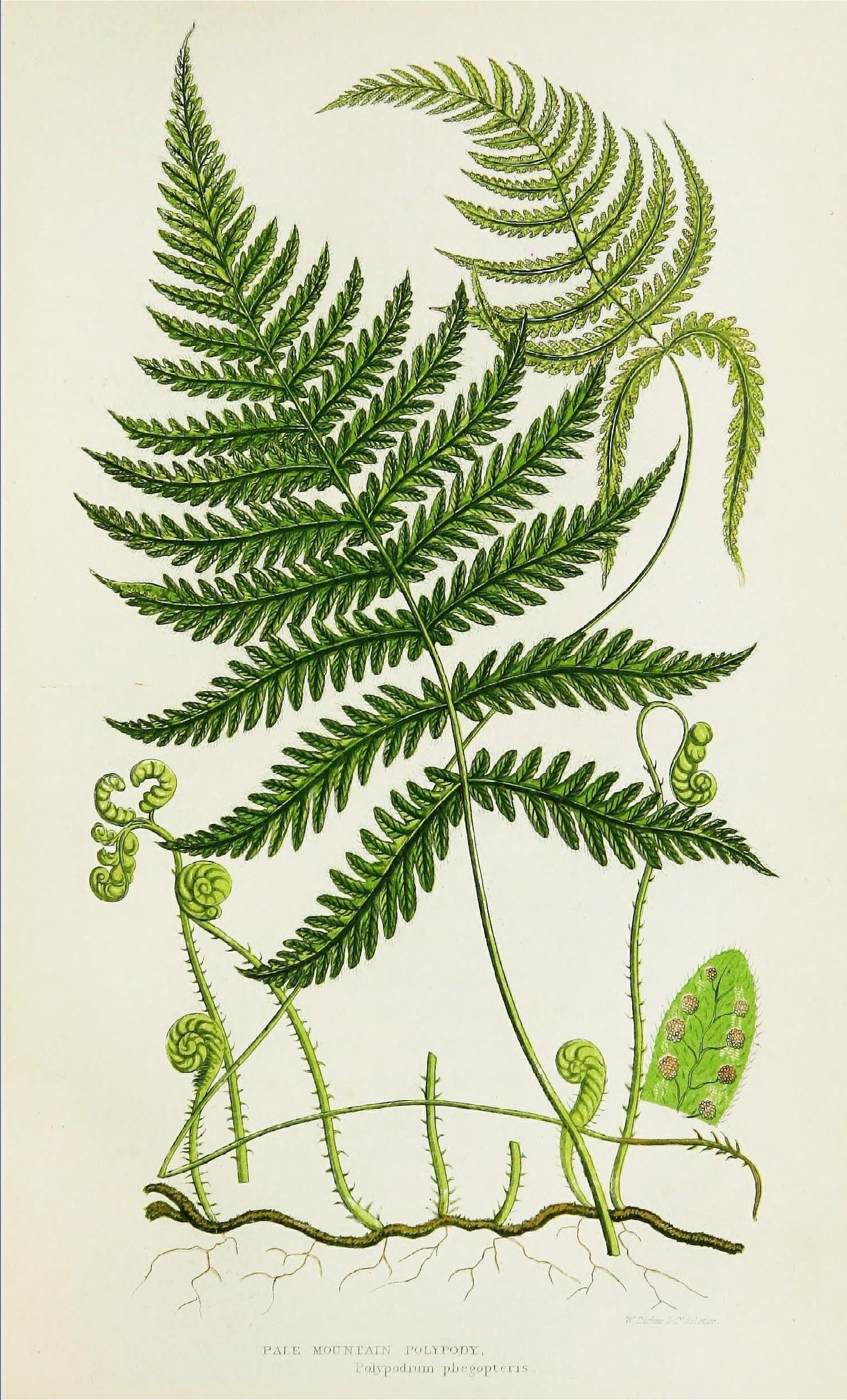
Pratt, A. 1855. The ferns of Great Britain, and their allies the club-mosses, pepperworts, and horsetails.